Stanford University
B.A.S. in Computer Science and Economics
GPA 3.76 / 4.00 · Major GPA 3.87 / 4.00
Linear Algebra & Multivariable Calculus · Introduction to Probability · Programming Abstractions · Machine Learning for Algorithmic Trading
Introduction / 01
I’m an undergraduate at Stanford studying computer science and economics.
Before Stanford, much of my academic work was in chemistry. Since then, I’ve worked on political-science research and pursued interests in political philosophy, theology, and markets. I enjoy questions that connect scientific, economic, and philosophical ways of understanding the world.
Résumé ↗Background
B.A.S. in Computer Science and Economics
GPA 3.76 / 4.00 · Major GPA 3.87 / 4.00
Linear Algebra & Multivariable Calculus · Introduction to Probability · Programming Abstractions · Machine Learning for Algorithmic Trading
Dual enrollment
GPA 4.00 / 4.00 · SAT 1580
Bioinorganic Chemistry · Intermediate Organic Chemistry · Topics in Applied Data Analysis · Introduction to Probability
SIEPR · Stanford University
Building a structured dataset from the Thomas Register of American Manufacturers (1905–2006) using multimodal models and OCR. Developing a hand-verified evaluation set to compare extraction accuracy, consistency, latency, and cost.
Political Science Summer Research College · Stanford University
Built extraction and harmonization pipelines for 13.2M+ teacher-roster and compensation records. Constructed labor-market measures, linked NCES data, and validated probabilistic teacher-voter linkage.
Charles R. Blyth Fund · Stanford University
Developed and presented pitches on American Healthcare REIT, Cigna, and BWX Technologies using fundamental research and DCF, NAV/FFO, comparable-company, and scenario-based valuation. Covering REITs and emerging-market equities.
Wharton Investment Competition · Pioneer High School
Led a seven-member team to a top-50 finish among 1,800 teams from 66 countries in 2025. Set portfolio allocations and withdrawal timing around Nigerian funding goals, and built subsector-specific factor models.
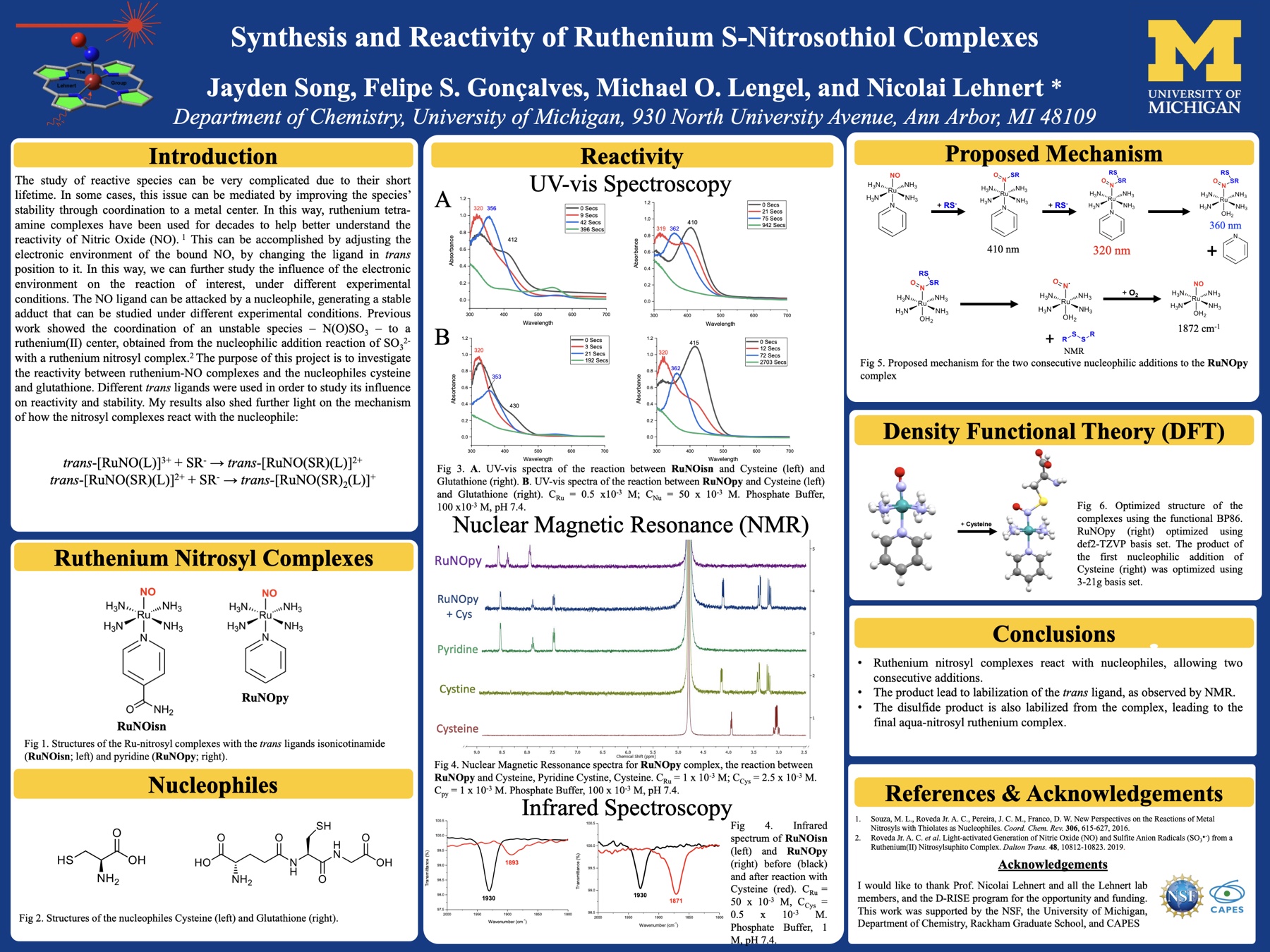
Lehnert Lab · University of Michigan
Conducted wet-lab and computational research on ruthenium nitrosyl complexes using Gaussian 16. Presented the work at the University of Michigan Undergraduate Research Symposium and national conferences at ACS and the University of Pennsylvania.
Projects / 02
The engine ingests OPRA and GLBX data alongside dxFeed and IBKR, applies independent products in parallel, and publishes a consistent memory-mapped view for other processes. Readers wake only when the market data they depend on changes, avoiding snapshots, copies, and polling intervals.
Each order advances in its own lane, so one broker round trip cannot stop unrelated work. Rapid reprices collapse to the newest intent, urgent cancels move ahead of queued work, and versioned mutations prevent a late response from restoring stale state. A common executor keeps three incompatible broker lifecycles out of the core state machine.
I gathered annual staff rosters through public-records requests and state data sources, then built a pipeline that converted millions of inconsistent rows into one common schema. It deduplicated job descriptions, classified them in batches with an LLM, and merged the labels back into each state roster while keeping true zeroes separate from missing data. I then helped link teachers across years and to voter files so the research team could measure moves between schools, moves between districts, and exits from teaching.
Leading White Paper Capital required my team to build a portfolio around a client’s long-term community goals. We moved from macroeconomic research to sector analysis, company valuation, portfolio construction, and risk testing—turning many competing views into one coherent strategy.
The chart uses monthly closes and the portfolio workbook’s recorded Price Paid, indexed to $100,000 on 18 October 2024. The S&P 500 uses the same starting date. Both series are price-only; dividends and foreign-exchange effects are excluded.
Starting weight × holding price return = contribution to the portfolio
I investigated how ruthenium nitrosyl complexes react with cysteine and glutathione. UV-visible, NMR, and infrared spectroscopy helped identify the reaction products, while density functional theory tested the proposed structures. Together, the evidence supported a mechanism with two consecutive nucleophilic additions.
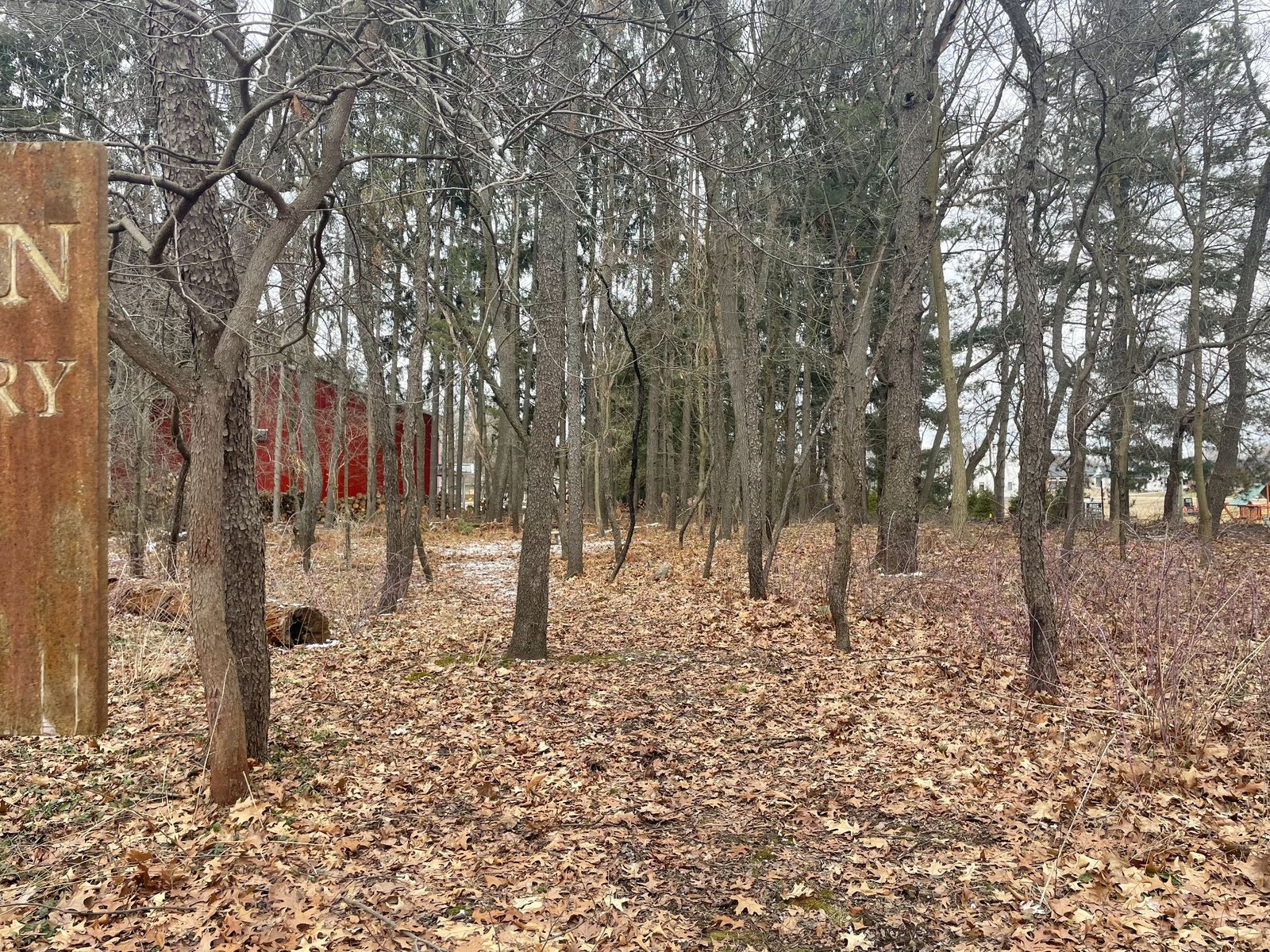
I coordinated township officials, historical groups, Scouts, and local volunteers to restore Popkins Cemetery. We cleared invasive growth, extended the footpath into a loop, and installed an entrance arch, making its thirteen graves easier to reach—including the grave of Revolutionary War veteran Sylvester Richmond.
03 / Public Equities
Essays / 05
Can secular political orders justify their foundations more rationally than political theology—or do both ultimately place their first principles beyond ordinary critique?
“Across political orders, foundational beliefs are held not as revisable preferences but as moral truths.”
The essay begins with Meier’s distinction between political philosophy, grounded in reason and revisability, and political theology, grounded in revelation.
Foundational beliefs must operate as settled moral facts whenever they justify law or coercion, while their formation and revision remain shaped by intuition, institutions, and material pressure.
“Dissonant heresy” names the contradiction that appears when an order presents a belief as a conclusion of reason while enforcing it as an unquestionable foundation.
Close readings developed from questions about authority, reason, faith, and political knowledge.
“Individual conscience can alert us to a contradiction in public morality, but conscience does not resolve the contradiction merely by asserting itself.”
Benedict’s rejection of religious violence depends on an unstated premise: that a rational means must be consistent with the principles and ends of genuine faith.
“Political knowledge requires the active examination of one’s assumptions rather than merely replacing one political belief with another.”
Interests / 06
My Stanford Sophomore College introduced me to Strauss, Plato, Sophocles, and Marilynne Robinson, and I have kept following those questions through Hegel. The rest of the shelf is less organized: fiction about cities and memory, Soros on reflexivity, and books about software and economic systems.
I create armor and clothing for Skyrim under the name Pulcharmsolis ↗. Across 23 releases, the work has reached 6.9 million downloads on Nexus Mods.
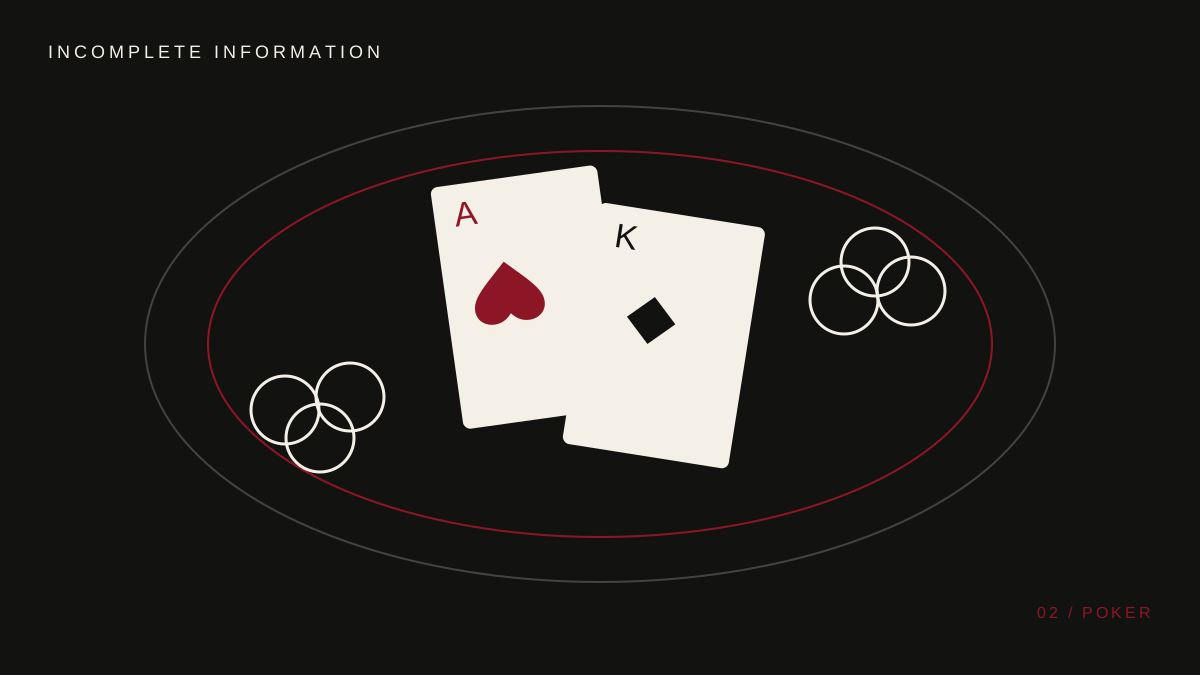
I play poker and like the mix of probability, incomplete information, and reading the table.